Skip to content
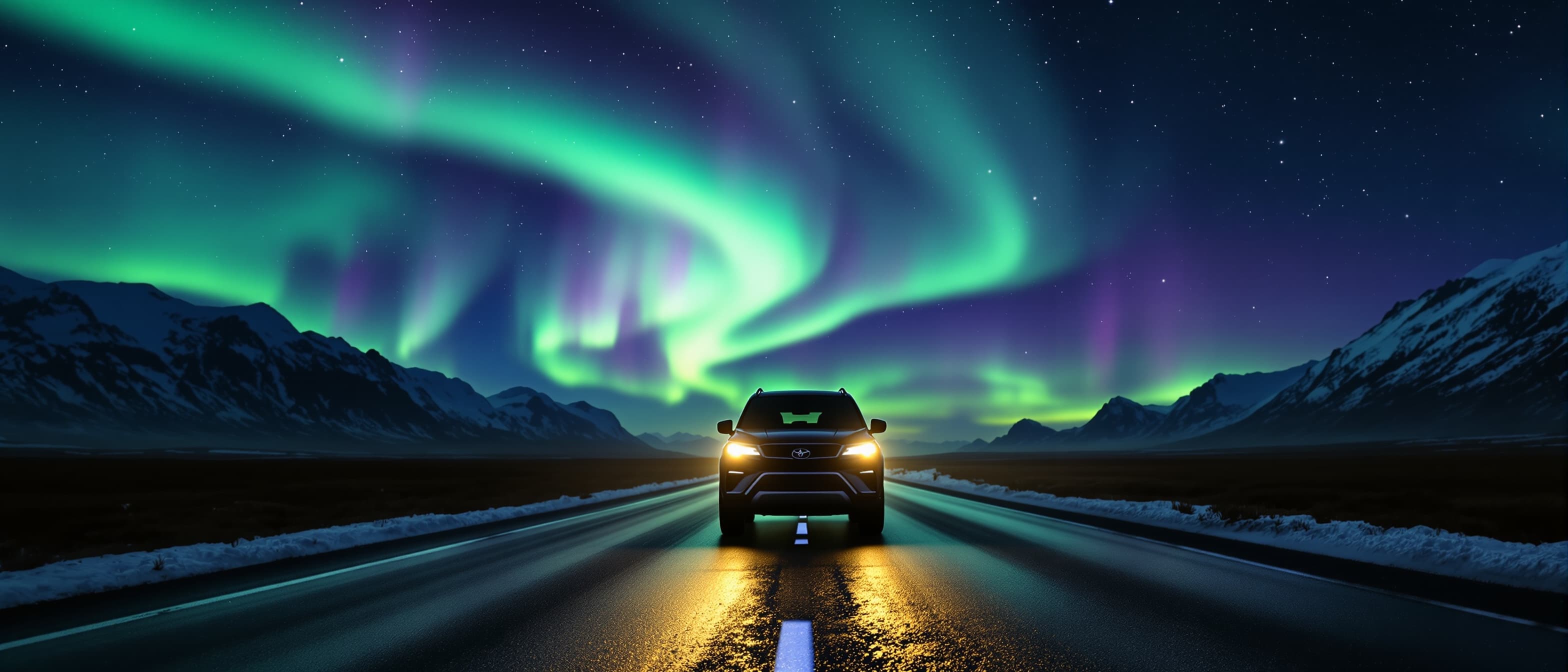
Black SUV driving under aurora on Arctic coastal road

Plan your trip

Everything you need before you land

Honest, locally-sourced answers — winter driving, ferries, safety, money, apps, what to do every month.

Studded Tires Law

In Norway, studded tires are permitted during winter months to improve traction on icy roads, with extended use allowed in northern regions.

  • Allowed from November 1 to the first Sunday after Easter in most areas
  • In Nordland, Troms, and Finnmark, use from October 1 to Easter
  • Minimum tread depth 3mm for winter tires
  • Fee for entering city centers with studded tires
Source

Autopass Toll

AutoPASS is Norway's electronic toll collection system; tourists with foreign vehicles must register to avoid fines and manage payments.

  • All vehicles pay tolls; register online for foreign plates
  • Cameras automatically detect and charge vehicles
  • Special rules for vehicles over 3.5 tons
  • Higher tolls in 2026 for Oslo and new roads
  • Payment via invoice if not registered
Source

Ferry Schedules

Ferry schedules in northern Norway vary by season, with more frequent departures in summer to accommodate tourists.

  • Summer: up to 3 daily on major routes like Bodø-Moskenes
  • Winter: reduced to 1-2 daily, weather-dependent
  • Check Torghatten Nord for updates
  • Bookings recommended in peak season
Source

Ev Charging

Norway leads in EV infrastructure with thousands of fast-charging stations, especially along highways and in northern areas.

  • Over 10,670 fast chargers nationwide in 2026
  • 1,192 new points added in 2025
  • Common in Tromsø, Lofoten; use apps like ChargeFinder
  • Free or low-cost in many public spots
Source

Fuel Costs By Region

Fuel prices in Norway are high due to taxes, with slight variations; northern remote areas may cost more.

  • Gasoline: 21.68 NOK/liter average
  • Diesel: 23.96 NOK/liter
  • Higher in Lofoten/Senja by 1-2 NOK
  • Tromsø: around 22 NOK/liter
  • Use apps for real-time prices
Source

Road Closures

Winter weather causes frequent road closures in northern Norway, particularly on E10 in Lofoten; always check updates.

  • E10 sections close due to avalanches/snow
  • Reopen typically April-May
  • Monitor vegvesen.no for live status
  • Alternative routes via ferries
Source

Dangerous E10 Stretches

The E10 road through Lofoten has hazardous sections prone to avalanches, narrow paths, and sudden weather changes.

  • Avalanche risks in winter
  • Narrow, winding roads near cliffs
  • Frequent closures in storms
  • Drive cautiously, especially at night
Source

Snowchains

Snow chains are required for heavier vehicles in winter conditions to ensure safe driving on snowy roads.

  • Mandatory for vehicles over 3.5 tons if snow expected
  • Recommended for all in severe weather
  • Tread depth at least 3mm for winter tires
  • Carry in car during winter season
Source

Common travel questions

Quick answers we get asked all the time. Updated as the season changes.

When is the best time to see the aurora borealis in Northern Norway?

September through early April. Peak visibility is October–March when nights are darkest. Sky must be clear (cloud cover under 40%) and Kp index 2 or higher. Senja, Tromsø and Alta sit directly under the auroral oval. Forecast at /tools/aurora.

When is the midnight sun in Northern Norway?

From 20 May to 22 July in Tromsø; longer the further north you go. The sun does not set during this period. The opposite, polar night, runs 27 November–15 January.

Do I need a 4WD or special tires to drive in Norway?

Studded or M+S winter tires are mandatory by law from 1 November–first Sunday after Easter (in Northern Norway). 4WD is not required on main roads (E6, E10) but useful on icy mountain passes. Most rental cars in Tromsø/Lofoten airports come winter-ready.

Can I sleep in a camper-van anywhere in Norway?

Allemannsretten allows wild camping for 1–2 nights, 150m from the nearest house, on uncultivated land. Many municipalities ban roadside parking on Fv-roads — fines up to 3000 NOK. Designated kommune bobilplasser (50–250 NOK/night) are recommended in summer when wild spots fill up.

How much does a 7-day trip to Northern Norway cost?

Budget per person, food + lodging + car: roughly NOK 8,000–12,000 (low) / 15,000–22,000 (mid hotel) / 30,000+ (luxury cabin + guided tours). Add NOK 800–1,200 per ferry crossing if you bring a car.

Is Northern Norway expensive?

Yes by international standards. Restaurant meal NOK 250–450, beer NOK 110, hotel mid-range NOK 1,500–2,500/night, gas NOK 22–25/L. Self-catering and shared ground transport cut costs significantly. Fishing licences and many trails are free.

Do I need to book whale-watching tours in advance?

Yes, especially in November–January (winter orcas + humpbacks at Skjervøy) and June–August (sperm whales at Andøya). Boats fill up days ahead. 95% sighting guarantee on most operators; book direct from Stø, Andenes or Skjervøy harbours.

Can I drink tap water in Northern Norway?

Yes — tap water is among the cleanest in the world. You can also drink from most mountain streams above the tree-line. No bottled water needed.

What language is spoken in Northern Norway?

Norwegian (Bokmål dialect mostly) is the local language. English is spoken fluently by almost everyone, including in remote villages. Sami is co-official in inland Finnmark. Most signage and menus have English translations.

Is one week enough to see Senja, Lofoten and Tromsø?

Tight but possible. Rough route: Tromsø (2 nights) → drive to Senja via Brensholmen ferry (2 nights) → ferry to Lofoten via Andenes (3 nights). For unhurried slow-travel pace, 10–14 days is much better. Skip one of the three if you only have 5 days.